
Empowering Sustainable Futures - MENA NDCs Climate Action
A report by the International Energy Forum produced in cooperation with the Middle East Green Initiative and Circular Carbon Economy Regional Collaboration
June 2026


Overview
The IEF Progress Report for MENA NDCs (Nationally Determined Contributions) and Climate Action presents an integrated overview of the region’s climate progress and emerging priorities. Drawing from countries’ official submissions to the United Nations Framework Convention on Climate Change (UNFCCC) and national strategies, the report reflects on how the countries within the Middle East and North Africa (MENA) region are advancing toward the shared goals of the Paris Agreement. It provides an evidence-based foundation for understanding the trajectory of climate ambition across the region and the enablers that will shape its next phase of action.
The region stands at a unique intersection of opportunity and constraint. It possesses tremendous diverse energy resources, ranging from renewable sources to hydrocarbon reserves, that position it as a key player in reliable and affordable global energy transitions. At the same time, it faces acute challenges of extreme water stress and droughts, rising temperatures, and rapidly growing urban populations. These pressures unfold alongside economies that are still shaped by energy-intensive development patterns. Such conditions demand a deliberate approach to climate action that safeguards energy security, maintains affordability, and builds resilience while driving emissions reduction. Climate policy in MENA is therefore not only centered on mitigation and adaptation, but also on redefining long-term economic and social resilience amid accelerating just transitions, including within the context of the Middle East Green Initiative (MGI) and through dialogue and collaboration in various international energy platforms including the International Energy Forum (IEF) and Clean Energy Ministerial (CEM).
Across this complex landscape, the region is already demonstrating meaningful progress. Countries are scaling up clean power generation, expanding electricity grid infrastructure, and embedding efficiency across industries and cities ensuring long-term economic and social stability of the region in the context of multiple just transitions. Accelerated deployment of renewables, early investments in hydrogen and carbon capture, utilization, and storage as well as efforts in methane reduction and flaring control are positioning MENA as a hub for new energy technologies.
Similar advances in climate adaptation are improving food and water security, protecting coasts and cities, and restoring ecosystems through large-scale nature-based solutions such as mangrove and land rehabilitation, and afforestation. Together, these measures reflect a growing momentum to intersect national development agendas with lower-emissions and climate-resilient growth.
Yet, the pace and depth of progress remain closely tied to the means of implementation that underpin every national effort. Many targets and actions depend on strengthened access to finance, technology, and capacity building.
These conditionalities highlight the importance of creating supportive environments for investment and innovation, guided by clear policy frameworks, robust data systems, and institutional coordination. Expanding regional and international cooperation, including through the IEF and MGI platforms can further unlock opportunities for knowledge exchange, technology transfer, and sustainable financing, enabling countries to translate ambition into long term transitions.
The Circular Carbon Economy (CCE) framework offers a practical framework to help further guide this process. By managing emissions across four interconnected pillars, reduce, reuse, recycle, and remove, it provides a coherent structure for countries to pursue net-zero goals while advancing energy security and economic diversification. The CCE represents a systems-based approach that integrates technological innovation, policy design, and market mechanisms to balance emissions with removals, bridging growth, resilience, and sustainability in the region’s transitions.
Through this IEF report, the region’s progress is captured as a collective step forward in defining a distinct MENA pathway. One that builds resilience, fosters innovation, and contributes meaningfully to global climate solutions. It highlights that climate action in MENA is driven not only by global commitments but by the region’s pursuit of sustainable and resilient prosperity.
"This report shows that MENA’s Nationally Determined Contributions deserve closer attention. They reflect a region working through complex energy, economic and environmental realities, while advancing practical climate action across mitigation, adaptation and implementation. The report provides a clearer picture of how national commitments are evolving, where progress is being made, and what is needed to support delivery."
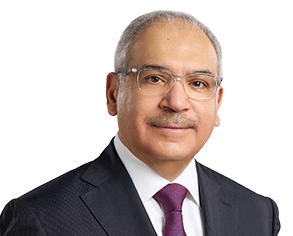
Jassim Alshirawi
Secretary General, IEF
About the International Energy Forum
The International Energy Forum (IEF), the global home of energy dialogue, is the trusted and neutral intergovernmental platform for energy dialogue among member states, industry leaders, and experts. Its Ministers represent producing, consuming, and transit countries in every region, at every stage of economic development, and across both established and emerging energy-system supply chains. The IEF advances global energy security through open and inclusive dialogue spanning all fuels, technologies, and systems.
