
IEF17 Affirms Shared Responsibility for Energy Security and Resilience
Riyadh dialogue identifies priorities for investment and resilience and the IEF ministerial program through 2030. USA announces return to IEF.


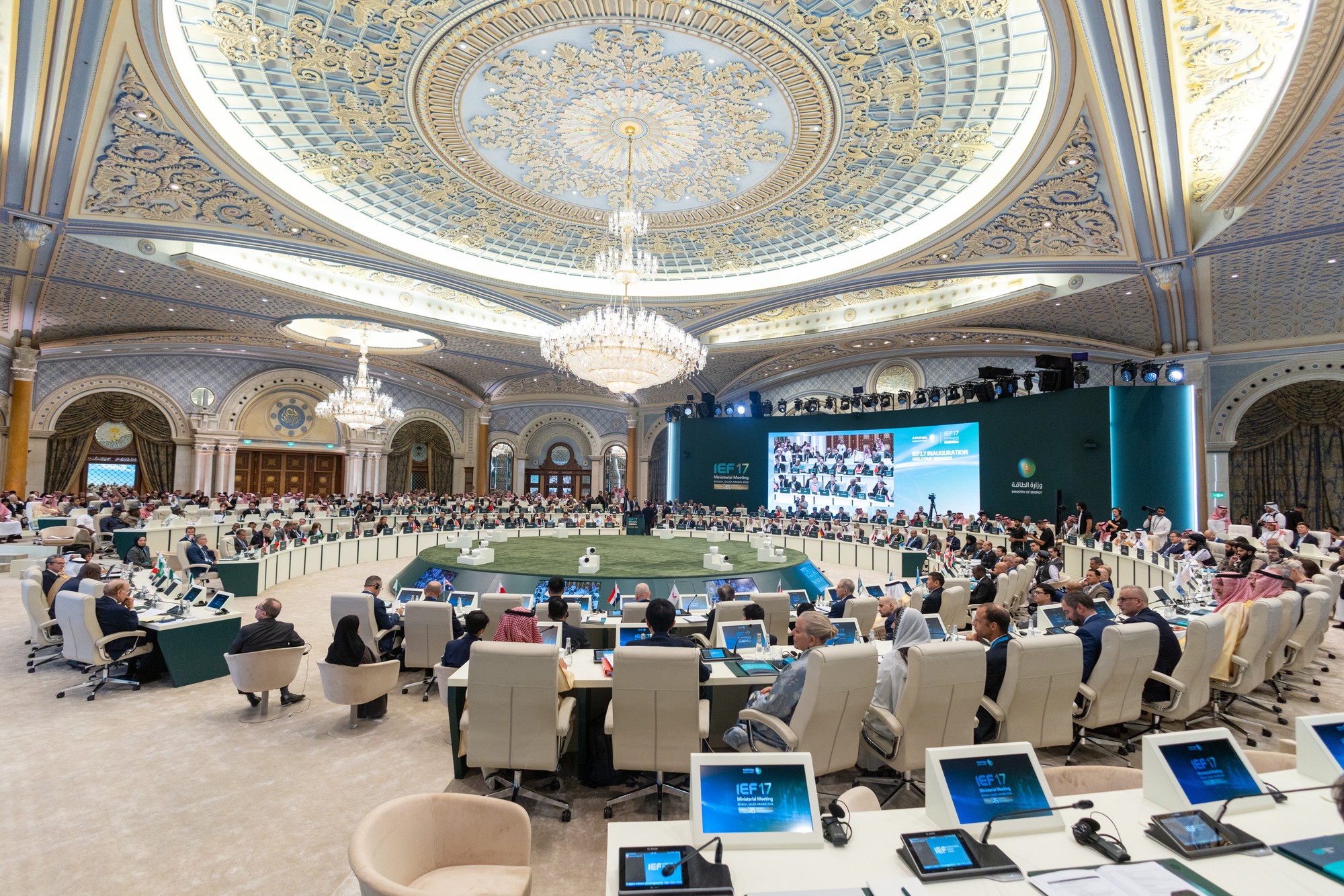
Energy ministers and industry leaders concluded the 17th International Energy Forum Ministerial Meeting (IEF17) in Riyadh today, highlighting shared responsibility for energy security, sustained investment across energy systems and stronger market data as priorities for international cooperation.
Hosted by Saudi Arabia and co-hosted by Italy and Nigeria, the meeting brought together energy ministers and national representatives, and energy industry leaders from around the world, as well as International and regional organizations and research institutions at the Ritz-Carlton Riyadh.
HRH Prince Abdulaziz bin Salman Al Saud, Minister of Energy, Industry and Mineral Resources, chaired the meeting, supported by Italian Minister of the Environment and Energy Security Gilberto Pichetto Fratin and Nigerian Minister of State for Petroleum Resources Senator Heineken Lokpobiri.
Convened under the theme Energy Security and Shared Goals in a New Era, IEF17 provided a neutral setting for producers, consumers and industry to engage amid geopolitical tensions, supply disruptions and changing investment and trade patterns.
Ministers and industry participants expressed their full solidarity with the Kingdom of Saudi Arabia and its people following the attacks on civilian infrastructure, underscoring that the Riyadh Ministerial itself stands as a concrete expression of resilience, unity and collective commitment.
The Host Country's concluding statement highlighted areas of common concern across the two plenaries.
"Energy security is a shared responsibility," IEF Secretary General Eng Jassim Alshirawi said in his remarks. "Security of supply and security of demand must stand together, sustained by producer-consumer relations and solidarity."
The IEF Secretary General joined Ministers and delegates in welcoming the announcement by the United States that they would be rejoining the IEF in recognition of its unique role as a neutral platform for producer - consumer dialogue, data-driven research and reporting.
From the session concluding plenary dialogue
Shared security and preparedness. Protecting infrastructure and trade routes, diversifying suppliers and transport corridors, and maintaining appropriate capacity and inventories can strengthen resilience to disruption.
Investment across energy systems. Sustained investment in production, refining, LNG, grids and storage must accompany the expansion of new technologies and critical mineral supply chains.
Affordable and sustainable pathways. Energy access, economic development and emissions reductions should advance together, drawing on national circumstances and a broad range of effective technologies.
Policies that enable investment and trade. Predictable rules, accessible finance and proportionate, interoperable standards can help government–industry partnerships deliver practical solutions at scale.
Evidence for market confidence. Timely and comparable data, transparent outlook assumptions and better understanding of physical and financial markets support informed decisions in stable conditions and during crises.
Data transparency and continuing cooperation
Ahead of the Ministerial, the heads of the JODI Partner Organizations endorsed the JODI Roadmap 2026–2030. Ministers welcomed the support of partner organizations and participating governments for stronger national reporting capacity and fuller, timelier oil and gas data, including inventories and refined products. The initiative, coordinated by the IEF, makes official data freely accessible to market participants worldwide.
Participants also welcomed continued collaboration through the IEA–IEF–OPEC Trilateral Work Programme, endorsed at the IEF Ministerial in Cancún in 2010. Its symposia, outlook comparisons and workshops help explain differences in assumptions and improve understanding of price formation, volatility and market interactions while respecting each organization's independent analysis.
IEF leadership dialogue with S&P Global and analysis of multidimensional energy pathways contributed perspectives on development, investment and differing national circumstances. The IEF's reports Empowering Sustainable Futures-MENA NDCs Climate Action and Global LNG Market Security provided further insights on regional climate action and resilient gas supply.
The ministerial program will continue with the tenth Asian Ministerial Energy Roundtable (AMER10), hosted by Türkiye with Japan as co-host in 2027; IEF18 in Rome, hosted by Italy with Türkiye as co-host in 2028; and IEF19 in Istanbul, hosted by Türkiye in 2030. Dialogue will also continue with the European Union, including through the seventh IEF-EU Energy and Climate Forum in Riyadh on 25 November 2026.
Ministers thanked Saudi Arabia for its leadership of the IEF Executive Board and welcomed Italy as the incoming Chair. The meeting emphasized continued cooperation to strengthen market understanding, enable investment and innovation, and extend the benefits of reliable, affordable energy.
